Ditch the Size Tag: Why Your Measurements Are the Only Number That Actually Matters
Let's be honest: there is nothing more frustrating than pulling a size 8 off the rack at one store, loving how it fits, and then walking into the store next door and needing a 12 in the exact same silhouette. It's not your body that changed between the two dressing rooms. It's the math — and the math has been broken for a long time.
Standardized sizing in American fashion is, at best, an approximation. At worst, it's a total fiction. Understanding why — and more importantly, knowing what to do about it — can completely change the way you shop.
The Short, Frustrating History of Sizing Standards
The idea of standardized women's clothing sizes in the US dates back to a 1939 government study that tried to establish consistent measurements across the garment industry. The data was collected from a narrow demographic, and the resulting size charts reflected that limitation. Those charts were officially retired by 1983, leaving brands free to develop their own sizing systems.
And develop they did — in wildly different directions. Today, a size 6 at one retailer can measure nearly two inches wider in the waist than a size 6 at another. Vanity sizing — the practice of labeling larger garments with smaller numbers to make shoppers feel good — has shifted the entire scale over the decades. The result? A size number that tells you almost nothing useful about whether a specific garment will actually fit your body.
For men, the situation is slightly more consistent thanks to measurements built directly into the sizing (a 32x32 jean, for example, references actual inches), but even then, cuts, stretch fabric, and brand-specific fitting vary enormously.
Why Your Measurements Are the Real Answer
Here's the thing about your actual body measurements: they don't change based on which store you're standing in. A 36-inch bust is a 36-inch bust whether you're shopping at a fast-fashion chain or a boutique brand. When you know your numbers, you stop chasing a size label and start making genuinely informed decisions.
The shift feels small, but it's transformative. Instead of grabbing three sizes of the same top and hoping one works, you can check a brand's size chart, match it against your measurements, and know with reasonable confidence which one to try first. Returns drop. Impulse buys that don't fit stop cluttering your closet. You shop with intention.
The Measurements That Actually Matter
You don't need to measure every inch of your body — just the key points that most garment sizing is built around. Here's what to track:
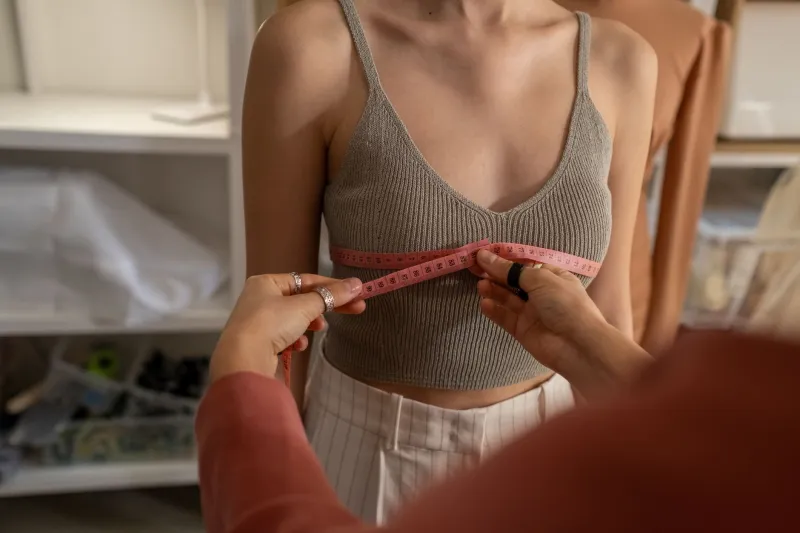
Bust: Measure around the fullest part of your chest, keeping the tape parallel to the floor. Don't pull it tight — you want a natural, comfortable fit.
Waist: Find your natural waist, which sits above your hip bones and below your ribcage. It's typically the narrowest part of your torso. Measure there, not at the waistband of your favorite jeans.
Hips: Measure around the fullest part of your hips and seat, usually about 7–9 inches below your natural waist.
Inseam: This one's easier with help. Stand straight, measure from your crotch to the floor (or to where you want your pants to hit). This is the number that determines whether trousers stack, break, or sit perfectly.
Shoulder Width: Measure from the edge of one shoulder to the other across your upper back. This is the hardest measurement to alter in tailoring, which makes it one of the most important to get right when buying structured pieces like blazers and coats.
Sleeve Length: From the center back of your neck, across your shoulder, and down to your wrist. Crucial for button-downs and outerwear.
Write all of these down somewhere you'll actually reference — your phone's notes app, a saved document, whatever works for you. The goal is to have them on hand when you're shopping, not just when you're standing in front of a mirror with a tape measure.
How to Use These Numbers When You Shop
Most reputable brands — and virtually all online retailers — publish size charts. The problem is that most shoppers skip them entirely, defaulting to the size they've always bought. Once you have your measurements, the process is simple: pull up the brand's chart, compare your numbers, and find the size where your measurements fall.
Pay attention to which measurement is closest to a size boundary. If your bust puts you in a medium but your hips put you in a large, look at the garment's construction. A flowy blouse? Size for your bust. A fitted dress? Size for your hips and plan to have the top taken in if needed.
For pants specifically, inseam and rise matter just as much as waist and hip measurements. Rise — the distance from the crotch seam to the waistband — determines whether a pair of trousers sits at your hips, your natural waist, or somewhere in between. A high-rise pant on a short torso can feel completely different than the same cut on someone with a longer midsection, even if the waist and hip measurements are identical.
Shopping Online Gets a Lot Less Risky
Online shopping has made the sizing problem both worse and better. Worse, because you can't try anything on before it arrives. Better, because most e-commerce platforms now include detailed size charts, customer reviews that reference fit, and in some cases, AI-driven fit tools that factor in your measurements.
When you're shopping online, your measurements become your fitting room. Check the size chart. Read reviews from people who mention their measurements alongside their experience. If a brand lists garment measurements — the actual dimensions of the piece, not just the body measurements it's designed for — even better. Comparing garment measurements to your own tells you exactly how much ease (extra room) you'll have in a given piece, which determines whether it'll feel fitted, relaxed, or boxy on your frame.
A Note on Alterations
Knowing your measurements doesn't mean every piece will fit perfectly off the rack — but it does help you shop strategically for alterations. Some adjustments are cheap and easy: hemming pants, taking in a waist, shortening a sleeve. Others are expensive and complicated, like reworking a shoulder seam or restructuring a chest. When you're deciding between two sizes of a blazer, for example, always size for the shoulders and plan to alter the waist. Shoulder work is where alteration costs spike fast.
Your measurements help you know which alterations are worth it and which mean a piece simply isn't designed for your proportions.
The Bottom Line
A size number is a store's best guess at where your body might land on a spectrum they invented. Your measurements are actual data. One of those is going to serve you a lot better in a dressing room — or on a checkout page at 11pm when you're trying to decide if that dress is worth the risk.
Take the 10 minutes to measure yourself properly. Keep those numbers accessible. And the next time a size label makes you feel like your body is the problem, remember: the label was never reliable in the first place. Your measurements are.