The Wardrobe Lie We've All Been Sold: Why 33 Pieces Will Never Be Enough
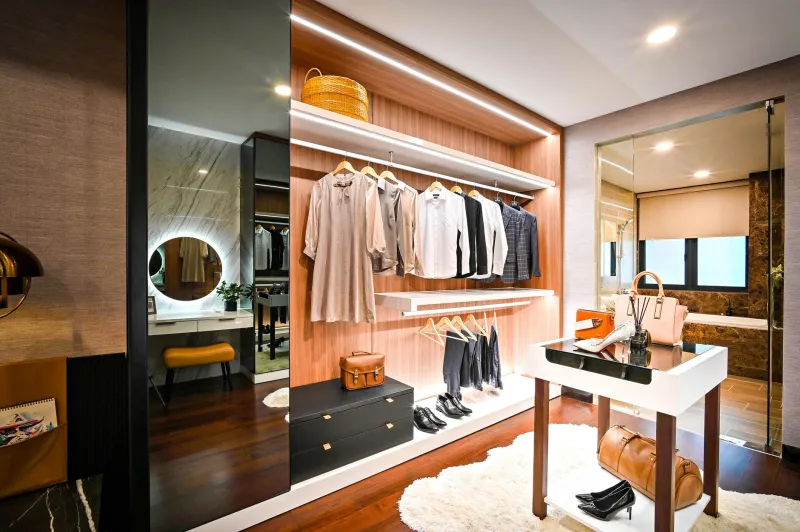
The Fantasy vs. Your Actual Monday Morning
Somewhere between a Pinterest board and a lifestyle blog, the capsule wardrobe became fashion gospel. The pitch is seductive: pare down to a curated collection of neutral, interchangeable pieces, and suddenly getting dressed becomes effortless. No clutter, no decision fatigue, just clean lines and a calm closet.
Except — for most people living actual lives in actual cities with actual jobs and social calendars — that version of reality doesn't hold up past week two.
If you've ever tried to compress your wardrobe into 30-something pieces and ended up feeling trapped rather than liberated, you're not doing it wrong. The formula itself might just be wrong for you.
Who the Capsule Was Actually Designed For
The classic capsule wardrobe concept was popularized decades ago by a London boutique owner who wanted to help women buy less but better. It was a smart idea for its time. But the lifestyle it assumed — largely office-based, seasonally mild, socially consistent — doesn't map onto how most Americans actually move through their weeks.
Think about your own week for a second. You might have a corporate presentation on Tuesday, a casual Friday that actually means jeans-and-sneakers casual, a weekend farmer's market run, a friend's birthday dinner that calls for something festive, and a Sunday gym session. That's five distinct dress codes in seven days. A 33-piece wardrobe built around navy trousers and white button-downs isn't going to carry all of that gracefully — not without either looking wildly underdressed or exhaustingly overdressed at every turn.
Climate Isn't Neutral, and Neither Is Your Life
Here's something the minimalism crowd conveniently glosses over: geography matters enormously. If you're in Phoenix, you're dressing for heat nine months out of the year. If you're in Chicago, you're layering through brutal winters and then pivoting hard into humid summers. If you're in Miami, the concept of a wool coat is basically theoretical.
A wardrobe that works in coastal California — where the capsule aesthetic was practically invented — falls apart in the Midwest. You physically need more pieces when you're managing dramatic seasonal swings. A single trench coat isn't going to cut it when January means negative wind chills and March means unpredictable everything.
The same logic applies to your social and professional life. A teacher needs washable, movement-friendly clothes that can survive a full day on their feet. A freelance creative working from home has completely different needs than someone in finance who's client-facing five days a week. A new mom, a weekend athlete, someone who travels for work every other week — none of these lives fit inside the same 30-piece box.
The Real Problem with Rigid Minimalism
Forcing yourself into a wardrobe that doesn't reflect your actual life doesn't just create logistical headaches. It quietly erodes your relationship with getting dressed. When your closet can't meet your daily demands, you start reaching for the same three outfits on autopilot — not because they're your favorites, but because they're the only things that work. That's not freedom. That's a different kind of rut.
There's also a financial trap buried in capsule culture that doesn't get talked about enough. The formula often pushes people toward expensive "investment pieces" to justify the small quantity. But if those pieces don't actually fit your lifestyle — if the silk blouse stays on the hanger because you have nowhere to wear it — the cost-per-wear math becomes a disaster regardless of the price tag.
Building a Closet That Actually Fits Your Life
So if the capsule isn't the answer, what is? The goal isn't more stuff — it's the right stuff, in the right quantity for your specific circumstances. Here's a framework that actually holds up.
Start with your real week, not your ideal week. Map out a typical seven days and note every category of activity: work, errands, social, exercise, travel, downtime. That's your baseline. Your wardrobe needs to serve those occasions without requiring heroic creative effort every morning.
Think in zones, not totals. Instead of obsessing over a piece count, organize your thinking around life zones. Work zone, casual zone, active zone, occasion zone. Each zone gets what it needs — no more, no less. A teacher's casual zone is going to be bigger than a banker's. That's fine.
Let your climate dictate your layers. If you live somewhere with genuine seasons, you need genuine seasonal wardrobes. That doesn't mean a bloated closet — it means a smart rotation. Store off-season pieces properly and swap them in as needed. Your summer wardrobe and your winter wardrobe don't have to compete for the same hangers.
Quality still matters — but context matters more. Yes, invest in pieces you wear constantly. But "investment" doesn't always mean expensive. A $40 tank top you wear twice a week is a better investment than a $200 blazer you wear twice a year. Evaluate pieces by how often they'll actually show up in your rotation, not by how good they sound in theory.
Give yourself permission to have fun. One of the more joyless side effects of capsule culture is that it treats personality as excess. Bright colors, bold prints, statement pieces — these get framed as frivolous. But fashion is supposed to be enjoyable. If a leopard print skirt makes you feel amazing and you'll actually wear it, it belongs in your closet regardless of whether it fits someone else's neutral palette.
The Closet That Works Is the One That Works for You
The best wardrobe isn't the smallest one. It's the one where almost everything gets worn, almost everything fits well, and getting dressed in the morning feels like a choice rather than a compromise.
That might mean 40 pieces. It might mean 80. It might mean a thoughtful mix of quality staples and affordable trend pieces that you rotate seasonally. The number isn't the point. The function is.
Minimalism as a philosophy has real value — buying less, choosing more intentionally, resisting the pull of fast fashion for its own sake. But minimalism as a rigid formula with a specific piece count? That's someone else's life, dressed up as universal wisdom.
Wear what actually works for you. Own the pieces that show up for your real days, not just your aspirational ones. That's the closet worth building.