Trend or Trap? How to Tell Which Seasonal Styles Are Worth Your Money Before You Buy
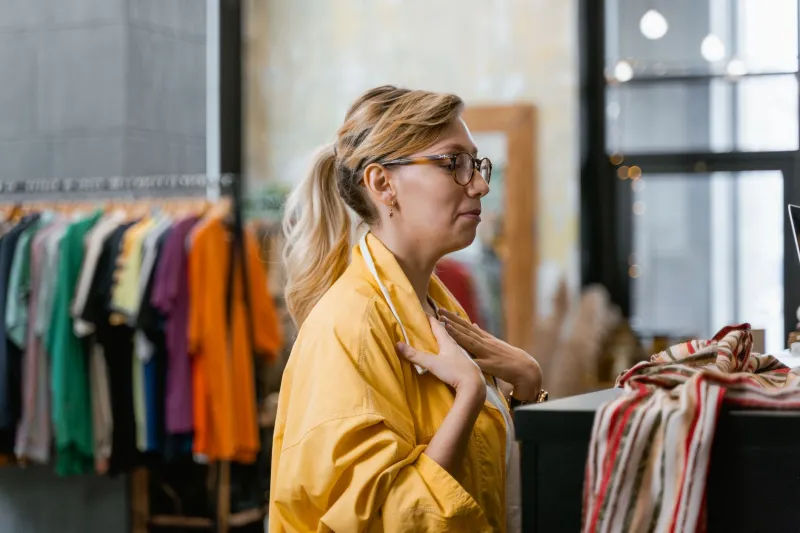
The Six-Week Regret Is Real
You know the feeling. You spot something on a rack — or more likely, on your Instagram feed — and it feels undeniably of-the-moment. You buy it. You wear it twice, maybe three times. And then, almost imperceptibly, it starts to look dated. Not vintage-cool dated. Just... over. By the time the season shifts, it's sitting in a corner of your closet radiating low-key shame.
This isn't a willpower problem. It's an information problem. The fashion industry moves fast and markets even faster, and it's genuinely difficult to distinguish between a trend with legs and a micro-trend engineered to sell product for six weeks and disappear. But there are signals — real, readable signals — that can help you make smarter calls before you spend.
Color Is Your First Filter
Color is one of the most reliable indicators of a trend's staying power, and it's also one of the most misread.
Here's the distinction that matters: classic colors in new combinations tend to last. Hyper-specific novelty colors almost never do. Think about the difference between a rich cobalt blue — a color that cycles back through fashion every few years in slightly different forms — versus a very particular shade of, say, neon chartreuse that's suddenly everywhere in March. The cobalt has a track record. The chartreuse is a moment.
When evaluating a color-driven piece, ask yourself whether you'd recognize that specific shade in a different season. If the answer is "it only looks right right now," that's a flag. Colors tied to a very specific cultural moment — think the Millennial Pink saturation of the mid-2010s — can feel suffocating fast once the cultural conversation moves on.
Neutral-adjacent colors — dusty tones, earth shades, classic brights like red or forest green — tend to integrate into wardrobes more naturally and hold up across multiple seasons. They're also significantly easier to style with pieces you already own, which matters for cost-per-wear math.
Silhouette Staying Power: The Shape Test
Silhouette is arguably the most important factor in evaluating a trend's longevity, and it's where people most often get burned.
Silhouettes move in long cycles. Oversized shapes, relaxed tailoring, and wide-leg cuts have been building momentum for years — which means they're not going anywhere immediately. A wide-leg trouser you buy today still has runway ahead of it. Compare that to a hyper-specific silhouette that's a dramatic departure from where fashion has been trending — an extremely cropped micro-mini after years of midi dominance, for example — and you're looking at something with a much shorter shelf life.
The rule of thumb: silhouettes that feel like a natural evolution of what's already in your wardrobe are safer investments than silhouettes that feel jarring or extreme. Extreme shapes make for great editorial content and runway moments, but they rarely translate into pieces that get worn repeatedly in real life.
Also pay attention to how a silhouette photographs versus how it actually wears. Some shapes look incredible flat-laid or on a model in controlled lighting and feel awkward in motion. If a silhouette only works in one very specific context, its wearability — and therefore its value — is limited.
Fabric Is Where Fast Fashion Exposes Itself
You can learn a lot about a trend piece's intentions just by touching it. Fabric quality is the most honest signal of whether something was designed to last or designed to sell.
Fast fashion trend pieces are frequently constructed from fabrics that photograph well but wear poorly — thin polyester blends, loosely woven materials that pill after a few washes, synthetic textures that don't breathe or hold their shape. These pieces are built for the photo, not the long haul.
When you're evaluating a trend item, run a quick fabric check. Does it feel substantial? Does it hold its shape when you stretch it slightly? Check the seams — are they reinforced, or do they look like they're already straining? A piece made from quality fabric — even a trendy piece — will reward repeated wearing. A piece made from inferior material will start looking tired almost immediately, which accelerates the regret timeline considerably.
This is also where the cost-per-wear calculation becomes your best tool. A $90 trend piece made from quality fabric that you wear 20 times costs you $4.50 per wear. A $25 piece made from flimsy material that you wear three times before it looks wrecked costs you $8.33 per wear and ends up in a landfill. The cheaper item was never actually cheaper.
The Rental and Resale Litmus Test
Here's a useful mental exercise: before buying a trend piece, ask yourself whether it belongs in your closet or in a rental service.
Some trend pieces are genuinely one-event items. A very specific statement dress for a wedding season. A bold printed suit for a work event where you want to make an impression. A maximalist holiday party look you'd feel ridiculous wearing in February. These pieces have real value — but that value is situational, not sustained.
For situational trend pieces, platforms like Rent the Runway or secondhand markets like Poshmark and ThredUp are genuinely better options than buying new. You get the look without the long-term commitment, and you're not stuck with something that has nowhere to go once the occasion passes.
The pieces that belong in your actual closet are the ones you can imagine wearing across multiple contexts over multiple seasons. If you can only picture yourself wearing it in one very specific scenario, it's a rental. If it could work for dinner, a weekend, a casual Friday, and potentially next year too — that's a buy.
A Quick Decision Framework Before You Check Out
Next time you're hovering over a trend piece, run it through these four questions before you commit:
1. Is this color timeless or tied to a moment? If you can imagine it in last year's wardrobe and next year's wardrobe, it's probably safe. If it feels aggressively current, proceed with caution.
2. Is this silhouette evolving or extreme? Natural progressions last. Dramatic departures fade fast.
3. Does the fabric justify the price? Touch it, stretch it, check the seams. Quality fabric is the difference between a piece that lasts and a piece that's done by the third wash.
4. Is this a closet piece or a rental piece? Be honest about how many times you'll actually wear it and in how many contexts. If the answer is narrow, rent it or skip it.
Trends are one of the most exciting parts of fashion — they signal where culture is moving, what feels alive right now, and how style is evolving. But not every trend deserves a permanent place in your wardrobe. The ones worth buying are the ones that work for your life beyond the moment you spotted them. Everything else? Let someone else wear it first.