Forget Your Body Type — Your Proportions Are What Actually Matter
Here's something nobody in the fitting room will tell you: that "pear" or "apple" label you've been carrying around since a magazine quiz in 2009 is doing absolutely nothing for your wardrobe. Body-type advice was built on broad generalizations, and while it had good intentions, it's been steering shoppers toward rules that don't actually account for the way real bodies are put together.
What luxury brands quietly factor into their design process — and what their in-house stylists use when dressing clients — isn't a shape category. It's proportional awareness. The ratio of your shoulder width to your hip width. The length of your torso relative to your legs. The span of your inseam versus your overall height. These are the measurements that determine whether a garment looks intentional on your body or just... off.
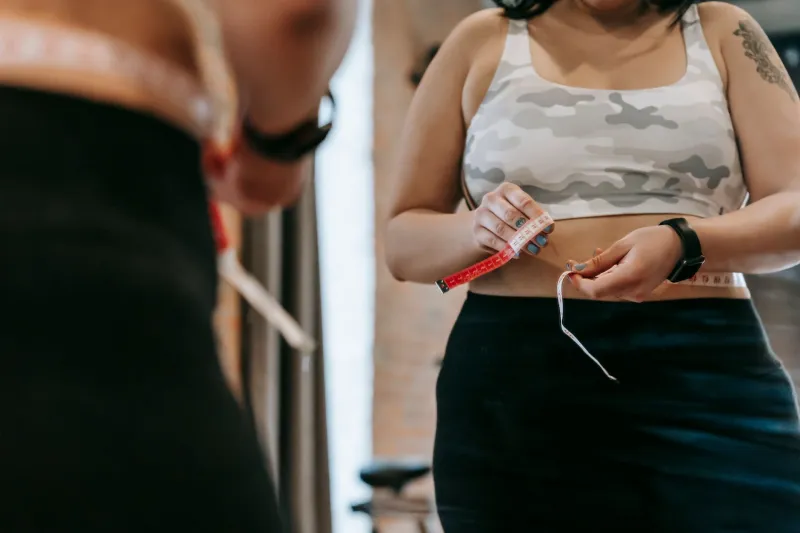
The good news? You don't need a design degree to start using this framework. You just need a tape measure, about fifteen minutes, and the willingness to let go of the label you've been shopping by.
Why Body-Type Rules Keep Failing You
The traditional body-type system was designed to simplify something complex, but simplification has a cost. When you're told to "balance your proportions" by adding volume to your shoulders because you're pear-shaped, that advice doesn't account for the fact that your torso might already be long, which means a structured blazer with shoulder detail actually makes you look truncated rather than balanced.
The same goes for "petite" advice. Being 5'3" doesn't mean your proportions mirror every other 5'3" person. Someone at that height might have a long torso and shorter legs, while another person at the exact same height has the opposite configuration. The clothes that work for one will swim on the other — and neither of them is doing anything wrong.
When you shop by body type, you're essentially shopping by a single data point. When you shop by proportions, you're working with a complete picture.
The Four Measurements Worth Taking Seriously
You don't need to measure everything. Focus on these four, and you'll have enough information to shop smarter immediately.
Shoulder width. Measure straight across the back from the outer edge of one shoulder to the other. This number tells you how structured or relaxed a neckline needs to be, whether set-in sleeves will pull on you, and how wide a lapel will actually read on your frame.
Torso length. Measure from the top of your shoulder (at the base of your neck) down to your natural waist. This tells you whether cropped styles will hit at your actual waist or cut awkwardly across your midsection. It also tells you whether high-waisted bottoms will elongate your legs or make your upper body look compressed.
Inseam length. The distance from your crotch to your ankle bone. This is the measurement most people ignore and the one that explains why trousers never seem to break at the right point, why midi skirts hit at the widest part of your calf instead of below it, and why you're constantly hemming things that are supposedly your size.
Shoulder-to-hip ratio. Compare your shoulder width to your hip measurement. This ratio — not the size of either measurement on its own — is what tells you how a straight-cut blazer versus a flared one will read on your body, and whether a boxy top will look editorial or shapeless.
How to Use This in the Fitting Room
Once you have these numbers, the way you evaluate clothes shifts. Instead of asking "is this flattering for my body type," you start asking more specific questions.
Does the shoulder seam sit at the edge of my shoulder or is it dropping down my arm? If it's dropping, the torso of the garment is already pulling away from your frame — no amount of styling will fix that without tailoring.
Where does this waistline actually hit me? A garment described as "high-waisted" might land at your natural waist, below it, or somewhere in between depending on how your torso length compares to the fit model it was designed on. Knowing your torso measurement lets you predict this before you even try something on.
Is the hem landing where it's supposed to? Midi-length skirts, for example, are designed to hit at a specific point on the leg. If your inseam is shorter than average, that "midi" might be hitting mid-calf on you when it was designed to fall just below the knee. Not a flaw in the skirt — just a proportional mismatch you can account for.
What This Means for How You Shop Online
Online shopping is where proportional awareness pays off the most. Most e-commerce size guides give you bust, waist, and hip measurements — but almost none of them tell you the torso length of the garment, the shoulder width, or the inseam of the fit model photographed.
The workaround is to look for brands that publish detailed garment measurements (not just size chart measurements) and to cross-reference those numbers against your own. If a blouse has a listed length of 23 inches and your torso is 17 inches, you already know it's going to hit somewhere below your hip — which might be exactly what you want, or might be a problem depending on what you're pairing it with.
Reviews that mention height and body specifics are also worth more than star ratings when you're buying online. A reviewer who says "I'm 5'6" with a long torso and this hits at my natural waist" is giving you real data you can compare against your own numbers.
The Bigger Picture
None of this is about achieving some kind of idealized silhouette. Proportional dressing isn't about making yourself look taller, thinner, or more symmetrical — it's about understanding why certain pieces work on your body and others don't, so you can stop blaming yourself when a garment fits weirdly and start asking better questions.
Luxury brands have always known that fit is the differentiator. It's why a well-cut piece from a mid-range brand can look more expensive than a poorly-fitted one from a designer label. The garment itself matters less than whether it was made for someone built like you.
Your body type is a category. Your proportions are a blueprint. And once you start working from the blueprint, you'll wonder why you ever settled for anything less.